Seville is one of those cities where life happens on the streets: terraces, tapas, and conversations that just happen by themselves. But is it as easy to make friends in Seville when you just arrived?
There are cities that are lived in.
And there are cities that are also shared.
In Seville, it seems that many things have an excuse to become a gathering: going out for a drink, tapas, meeting after work, sitting on a terrace, strolling through the city center, or simply meeting someone you know on the street.
Here, social life doesn't seem to be reserved for the weekend; it's part of the routine.
But is Seville really a particularly sociable city? And, above all, what lies behind that reputation?
In Seville, leaving home often means meeting someone.
One of the most visible characteristics of Seville is the amount of life that takes place outside the home.
The terraces, the bars, the squares, the parks, the streets of the city center and the neighborhoods function as spaces for meeting.
There’s no need to organize a big celebration to hang out with someone. Sometimes just a message is enough: “Should we grab something?” And that “something” can end up turning into a meal, a multi-hour dessert, or a plan that no one had planned for.
Perhaps that is part of the secret there.
Socialization does not always need a special occasion.
Eating out in Seville: the culture of sharing a table
There is something particularly interesting in the relationship between Seville and gastronomy.
Eating is not just about eating.
It is sharing.
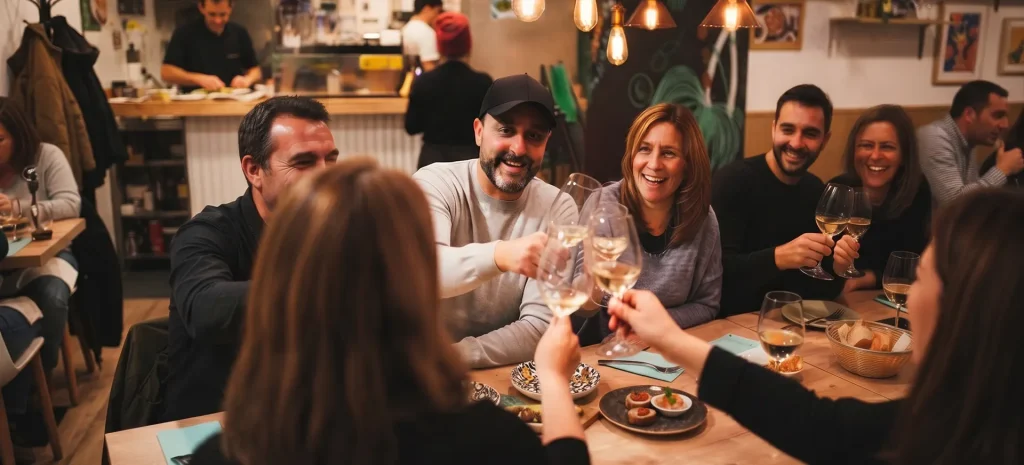
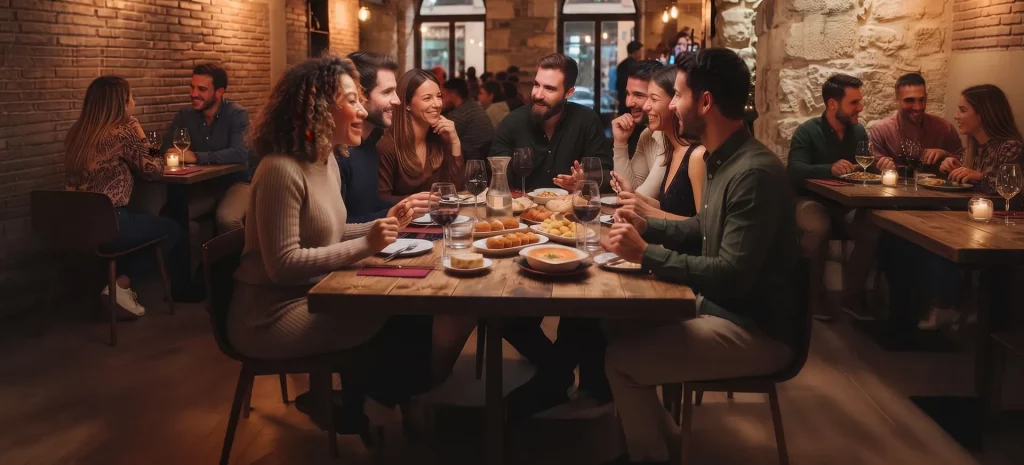
Share dishes, order another round, recommend a place, discuss which is the best bar or decide where to go next.
Food becomes an excuse to stay together a little longer, and that has a lot to do with the way we build relationships.
Because a conversation can start talking about food and end talking about travel, work, relationships, plans, or anything else.
The table has a curious ability to make people who barely know each other end up talking as if they were together for a much longer time.
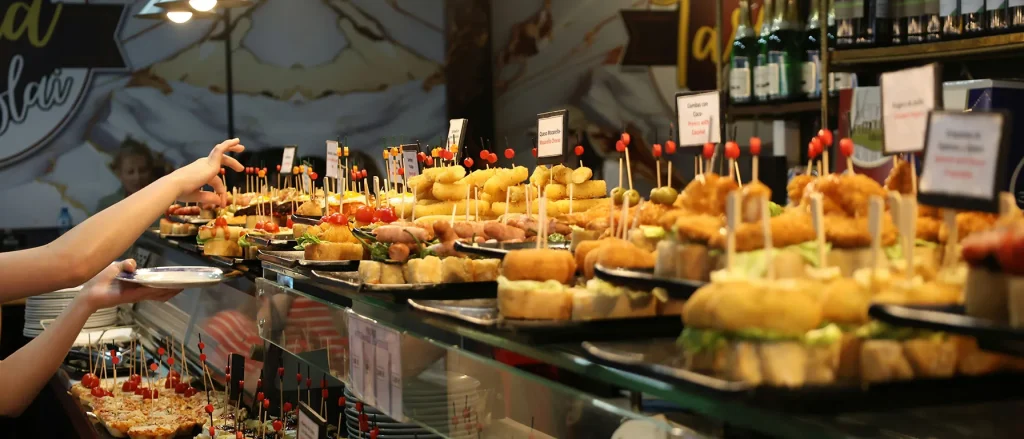
But Sevillian sociability also has a history.
The culture of socializing in Seville is not limited to bars and terraces.
Historically, the city has also had an important associative tradition.
A socio-economic report from the City Council of Seville Among other forms of participation, it included membership in brotherhoods and confraternities, neighborhood associations, sports and cultural organizations. This fact helps to understand that the collective dimension has long been part of the social life of the city.
Today, of course, the ways we interact have changed; we have social media, WhatsApp groups, apps, and hundreds of ways to stay in touch.
But there is something that no screen has been able to completely replace: being together.
A city that is also changing
Seville is not just a city of Sevillians.
Seville has about 690,000 inhabitants, and Almost 58,000 have foreign nationality, With Colombia being the main country of origin,” and linking “almost 58,000 have foreign nationality.”.
That means that the current Sevilla is also built by people who came from other places.
People who came to study, to work, to start a new stage, to seek opportunities.
Or simply because they fell in love with the city.
And here comes an interesting question:
How does someone new integrate in a city where it seems like everyone already has their own group?
Is it easy to make friends in Seville if you just arrived?
This is probably the most important part: being a sociable city doesn't mean it's easy to make friends.
The fact that a city has a lot of social life does not automatically mean that a person who arrives new finds their place.
You can be surrounded by people and feel completely new, you can live in a city for months and still not have a group to plan with.
Y Making friends after college It's not always easy either.
The opportunities to meet new people stop appearing automatically.
You have to look for them.
We need to get out of the routine.
And above all, you have to be willing to sit down with someone you don't yet know.
Perhaps that is why Seville has something special.
Perhaps the sociability of Seville lies not only in the fact that people go out a lot. Perhaps it lies in the fact that there are many small excuses to get together.
A tapa.
A coffee.
A terrace.
A walk.
A party.
A conversation which begins without too many expectations.
Because in the end, important relationships don't always start with a great story.
Sometimes they start with something as simple as:
“Should we get something to eat?”
Seville is full of people. The key is to get to know them.
The city has almost 700,000 inhabitants and an increasingly diverse population.
Among all those people, there is someone you haven't talked to yet.
Someone who can share your interests.
Someone who has just arrived in Seville.
Someone who also wants to expand their circle.
Or just someone you could spend a good afternoon with.
Because maybe meeting new people isn’t about looking for many people; it’s about finding more opportunities to get together. And if there’s something that Seville has been doing especially well for centuries, it’s precisely that: creating excuses to be together.
POPULIT arrives in Seville
POPULIT It is an app that organizes shared tables in restaurants so that people who don't know each other can sit down to eat or have dinner together. We are already in Madrid, Barcelona and Valencia, And now POPULIT comes to Seville so that meeting people in Seville is as easy as sitting down at the table.
At POPULIT we want to add one more.
One table.
People who don't yet know each other.
A conversation.
And the possibility of discovering what can happen when you decide to share a moment with someone new.
Because Seville already has the culture of getting together. We just want to help you find your people.
Discover the upcoming POPULIT experiences and book your spot at a shared table